
PhD Studies by An Saol Foundation Staff
In early 2025, Cormac Ryan, physiotherapist with the An Saol Founadation, embarked on a funded PhD Project at the University College Dublin (UCD), School of Public Health, Physiotherapy and Sports Science.
Here is a short summary of Cormac’s project:
My PhD is investigating the use of Robotic Assisted Gait Trainers (RAGT) in neurological rehabilitation. The terms RAGT refers to any robotic assistive device which helps an individual walk. This includes commonly known devices such as the Lokomat (which we have at An Saol), Exoskeletons and other devices. Specifically my research is examining the use of a mobile exoskeleton device in neurological rehabilitation. To date little is known about users brain activity when using these devices. Through the use of mobile, high density EEG technology, we’re hoping to better our understanding of what happens at brain level when someone walks using these devices. If success, further down the line, we want to start investigating if we can encourage the user the use their brain signals to power these robotic devices. The theory is that this encourages a more ‘top down’ natural approach to neurological rehabilitation i.e. rather than the robot moving someone’s legs, the user initiates walking once the required brain activity is detected. Or at least that’s the theory! We hope that this research will play a small part in advancing the future of neurological rehabilitation.
References of Interest
The Terrifying Realization That an Unresponsive Patient Is ‘Still in There’
Daniela J. Lamas, New York Times 11 January 2025
A provocative large study published last year in The New England Journal of Medicine suggests that at least one in four people who appear unresponsive actually are conscious enough to understand language. As a doctor who sometimes sees patients like this, these findings are, in a word, terrifying.
One would assume that people who appear completely unaware of the outside world, unable even to squeeze hands when asked, would not be able to understand or follow such a request.
And yet the brain imaging suggested that one-quarter of the patients heard the instructions and followed them — a sign that they are exhibiting what some neurologists might call “covert consciousness.” Given the difficulty of the test itself, the researchers believe the one-fourth figure is actually an underestimate of how many patients were experiencing some level of consciousness.
(Extract. Read the full article here.)
An Saol Foundation – Education and Training Sessions
Friday, 10 May 2024
Michael Poschmann

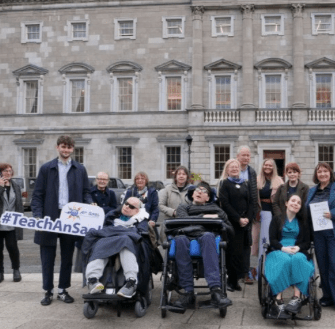
 Teach An Saol