
Voices of Those Affected by a severe Acquired Brain Injury (sABI)
DocuVideo Series in which those attending the An Saol Foundation’s service in their Santry-based Centre tell their stories and give testimony of the impact their attendance had on their lives.
Part 1 of 8: Who We Are – 10 April 2024
An Saol Foundation: A Lifeline for People with a severe Acquired Brain Injury (sABI)
Everyone deserves comprehensive, compassionate support, and a chance to rebuild their lives with dignity, purpose, and independence.
We were told that we had no future. There was no cure for a severe Acquired Brain Injury (sABI). We deserve more than just medical treatment; we need holistic care that addresses our physical needs as well as emotional wellbeing.
The State and its Agencies need to seize the opportunity and support us to start building Teach An Saol in 2024.
This is our testimony.
For more information, see video summary.
Part 2 of 8: Robert Flynn – 17 April 2024
The An Saol Foundation is the beginning of a culture change, says Brendan: “Robert is seen here as a normal human being, the way it should be.”
43 year old Robert had a heart attack while in Miami Airport in 2011 and suffered a hypoxic brain injury when his brain was deprived of oxygen.
“Rob understands everything that’s going on around him but the damage that was done affected areas of the brain that deal with things like sensitivity and his ability to cope with pain,” Brendan explained in an article in The Journal.
Following eight years in a nursing home, Robert now lives at home with his family. Robert and his father Brendan explain why the An Saol Foundation Centre is so important to them.
This is his story as told by him and his father.
For more information, see video summary (coming soon).
Part 3 of 8: Gavin Cahill – 24 April 2024
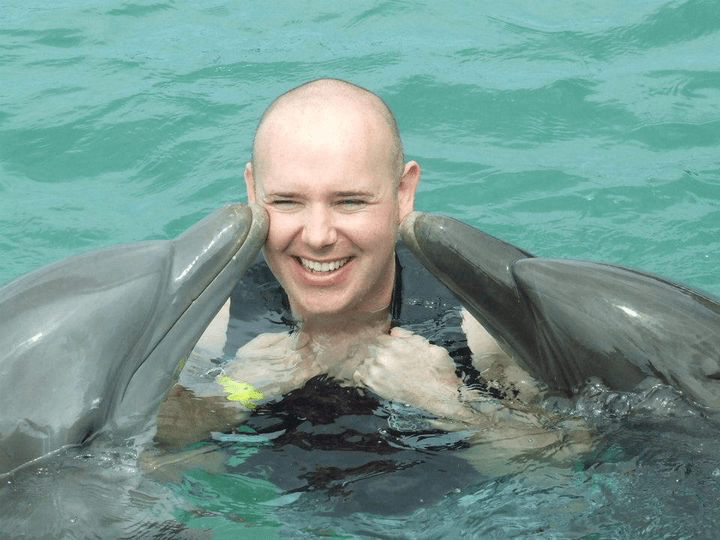
“So what help is there for people like Gavin?” asks his brother Gerard. “Lucky I was on the internet searching for a while and I found An Saol and if it wasn’t for this place Gavin would be just at home now in a bed or on his chair. That’s it. So this is a great outlet for him.”
Gavin sustained a severe brain injury in 2020 when he was 36 years old.
In 2023, his mother received a letter from a rehabilitation consultant telling her that “It is my view that your son’s health is deteriorating steadily, and that it would be more important to focus on his comfort, dignity and quality of life, rather than pursuing interventions which are no longer relevant or beneficial.”
His mother decided not to follow this doctor’s advice and ensured that Gavin started to attend the An Saol Foundation where he actively participates in a rehabilitation programme that is supporting and steadily improving his physical and mental condition.
He decided that he’d rather lived.
For more information, see video summary (coming soon).

Gavin exercising in the Erigo, An Saol Foundation National Centre for Life and Living with a severe Acquired Brain Injury (sABI).
Part 4 of 8: Lynda Killeen – 01 May 2024
“Physio keeps you alive,” says Lynda.
“This is coming from the horse’s mouth,” says her mother, Anne. “They have brain damage, but they know physio can keep them alive.”
Lynda suffered an epileptic seizure in the middle of the night. She was rushed to James’s Hospital in what’s called status epilepticus – having more than one seizure in five minutes. “For two and a half weeks,” Anne says, “Lynda was still having seizures all the time. She was in hospital for nearly four months. And this was all during COVID, no visitors.”
“When we went to bring her home, we had no idea of what state she was actually in. Because of COVID and the rules, I’d only seen her once. We didn’t really know anything of what was to happen and how bad she was. She was totally helpless. She could barely move any of her muscles… She had absolutely no muscle power whatsoever, because you lose a lot of muscle when you’re lying.
What a rehabilitation doctor said was to go home, bring Lynda out, let her see the parks and stuff like that, you know. That’s great rehabilitation isn’t it. You see the air, you see the birds, but that is not enough.
It’s not that somebody is just going to walk and be superman after rehab but they will regain some function. There are people with brain injuries all over the country. They don’t all live in Dublin. They all deserve rehabilitation. They all deserve help. So if we could have some satellite centres that people could access, that would be a great thing.”
For more information, see video summary (coming soon).

Physio keeps you alive! – And this is coming from the horses mouth. – Lynda Killeen and her mother Anne in the An Saol Foundation National Centre for Life and Living with a severe Acquired Brain Injury (sABI).
Part 5: Michael McKay – 08 May 2024
In the nursing home, Michael just sat there. You know, there wasn’t much physiotherapy. I sometimes wondered what was going to become of him. But now he’s two days a week in An Saol and it’s absolutely great.
Nursing homes are not built for brain injuries. And look, he does have good carers in that nursing home. They have to train to look after him. But you leave someone like that with someone who’s not trained, now I’d feel I’d have to be there every day if I didn’t know who was on.
At home if there’s a joke passed on the TV you’d turn around and see Michael having a good laugh, like, and his twin would come in and … you’ll give him a heart attack from laughing, you know.
Apart from the good physiotherapy, An Saol is like recreation for someone like Michael. Not just sitting in a bed or in a room. I do feel that they get a bit of enjoyment … no one knows what they take in, but I know my son enjoys what he does here. I’m a 100 per cent sure of that.
I really don’t know what I’d do without An Saol. I really don’t know what I’d do.
For more information, see video summary (coming soon).
We can see the signs in Michael’s body language or the way he reacts when we try to do things that it’s now a smile and ‘I want to do this’… So Michael is a popular guy around the place.
Part 6: Pádraig Schaler – 15 May 2024
“On a scale of one to five, Pádraig, what difference do you think An Saol has made to your life?” Pádraig presses the button held out to him. “No hesitation there,” Maria says. “It’s five out of five.”
On June 27, 2013, Pádraig was working in Cape Cod on a J1 visa. He was cycling to work when he was hit by a 4.3-ton van trying to overtake him and suffered a devastating brain injury. Nobody was ever prosecuted.
Hospital staff exerted considerable pressure on the couple to donate Pádraig’s organs and so help improve other lives. “And you’re in such a state of distress and they talk to you about the intolerable, meaningless life that [your son] is going to have. We decided at the time, we can’t think clearly here. Let’s just take him home.”
Ireland has hundreds of people like Pádraig living here. Every year, another 25 on average acquire a severe brain injury. This means that since his accident, a further 250 people have endured what Pádraig Schaler has endured.
Their son has not only inspired but also donated the name and logo of his Irish language podcast to the An Saol Foundation.
Reinhard says “It’s because of Pádraig that the An Saol Foundation was established. We’ve demonstrated that the service is working and is necessary. The next step must be to consolidate the service to make it permanent, and to offer the right infrastructure to deliver it.
“That’s our project, Teach an Saol, and we need the health services and the politicians and society in Ireland to focus on this as the next step,” he says.
Part 7: David Cahill – 22 May 2024
Always the life and soul of any party – that’s how his friends and family still think of David Cahill. He never lost his love of music – Bob Marley, Dr Dre, Snoop Dogg. He continues to enjoy watching the likes of Goodfellas and Scarface, mainly for actors De Niro and Pacino. And he didn’t much mind being called Pip – short for pipsqueak – before his voice broke.
Your typical adolescent, then: slagged, a slagger and full of fun. Little has changed. His mother, Catherine, talks about her youngest child, now 37. “Davey still loves the pub. He loves the noise. Last time we were out was for my 70thbirthday. He loved it.” She laughs.
And yet everything changed in late 2008. While on holiday David had three heart attacks that left the 21-year-old with a severe Acquired Brain Injury and his family floundering to find the best possible way forward for all of them. He arrived back to Dublin “with a big gash in his head that he still has, I think he got it the night before. He wasn’t covered by insurance and we had to raise [money] to get him back. We did this through fundraising. The people of Ballymun and Finglas were very good, they helped us.”
David attends four days a week. Here he enjoys “music therapy, robotic therapy, gate training which is actually very good for David’s muscles. There’s a lot of stretching. Standing as well which is really good for him. He seems to like standing the best. I think it’s good for him to be on his feet,” says Catherine. And from the sound of it, David agrees.
Catherine reflects on a future, purpose-built national centre, Teach An Saol: “I think Teach an Saol is a very good idea. Because David has had no respite from day one and I don’t get any respite. It’s needed around the country. I can’t say it’s been easy,” she says. “It’s been very hard. But Davey’s been amazing. He’s an inspiration to us, to be honest. I think he keeps me going.”
Part 8: Laura Reid Costello – 29 August 2024
 Teach An Saol